

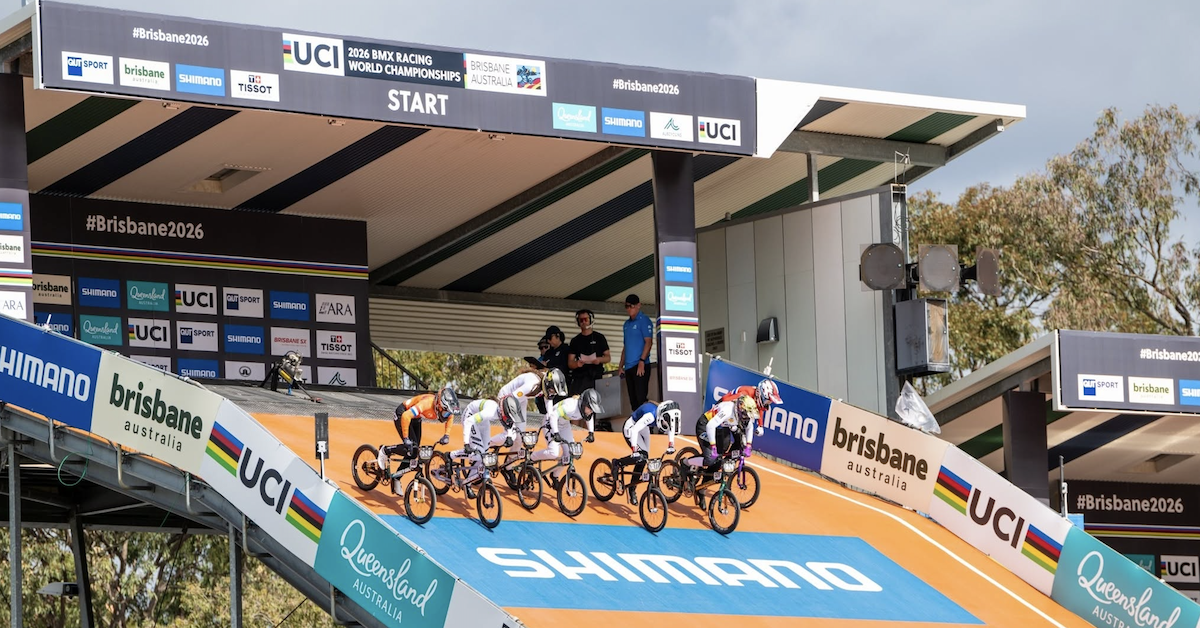
Major BMX Racing World Championships Near the Bayside Cut Short

The 2026 UCI BMX Racing World Championships ended early when strong winds forced organisers to cancel the elite finals at Chandler.


The event was due to take place at the Brisbane SX International BMX Centre on Sunday, 19 July 2026. However, strong westerly winds made the track unsafe. Riders could not begin the final rounds, and officials waited to see whether conditions would improve.

The Union Cycliste Internationale, known as the UCI, later cancelled the remaining elite races. The decision brought an unusual end to a major international sporting event at Chandler.

Completed results decide the medals

With no finals completed, officials used results from the last completed rounds to decide the medals.

Great Britain’s Bethany Shriever claimed the elite women’s title after recording the fastest qualifying time of 36.585 seconds. The result gave Shriever her fourth BMX world title. She had previously won in 2021, 2023 and 2025. Australia’s Saya Sakakibara took silver with a time of 36.908 seconds. Dutch rider Laura Smulders received bronze. 

Sakakibara misses her final chance at gold

Sakakibara entered the Brisbane championships as one of the leading contenders in the women’s event. The 26-year-old won gold at the Paris Olympic Games in 2024 and hoped to claim her first elite world title before an Australian crowd.

She advanced through Saturday’s racing and held the second-fastest time before the weather stopped further competition. After receiving silver, Sakakibara said she remained proud of the lap she completed. She also acknowledged that the result hurt more because the championships were held at home.

She had hoped to win gold but accepted that the weather was outside the riders’ control.

The local crowd also left a strong impression on her. Sakakibara said the support from spectators at the start hill made the occasion special despite the disappointing finish.

Asmus claims elite men’s title

For Australian rider Jesse Asmus, the completed results were enough to secure the elite men’s title.

Asmus became the world champion after setting the fastest time in the completed racing. He finished ahead of Great Britain’s Ross Cullen and France’s Mathis Ragot Richard. The title marked a major step in his career. Asmus had won his first Australian national title only three months earlier.

Still, the result brought mixed feelings. 

Asmus said the win felt different because he did not race across the finish line in front of the home crowd. Even so, he recognised the title as an important achievement. He had also watched the weather forecast before Sunday’s program. As a result, Asmus treated Saturday’s laps as if they might decide the championship. He focused on recording clean and fast times while racing could continue. His leading time later proved enough to secure the rainbow jersey.

Jolly adds another Australian world title

Queensland rider Josh Jolly also secured a title through his strong qualifying performance.

Jolly won the under-23 men’s world title after recording the fastest completed time in his category. He posted 33.681 seconds. The result followed his move to Brisbane earlier in 2026. Jolly relocated to train in Queensland and work alongside riders including Asmus. The victory became his second BMX world title. He had previously won the junior men’s championship in the United States in 2024.

Australia also collected medals in the junior events. Cameron Gatt won silver, while Isla Basa secured bronze. The national team had faced an earlier setback when Izaac Kennedy crashed during practice on Friday. The crash ruled him out of the championships.

Chandler event adds to Brisbane 2032 experience

The championships also drew interest as Brisbane prepares to host the Olympic and Paralympic Games in 2032.

The BMX centre at Chandler showed how the venue handled a major international competition. The cancellation also highlighted the value of allowing extra time for weather delays. The World Championships did not have a spare day for the elite finals. Organisers also needed to prepare for the next stage of the program.

By comparison, the Olympic BMX program is expected to include a contingency day for weather delays and this may allow racing to continue later when unsafe conditions interrupt competition.


Racing continues at Chandler

Although the elite world titles ended early, the wider championships continued at the Brisbane SX International BMX Centre.

Challenge and Masters racing was scheduled from Wednesday, 22 July, to Saturday, 25 July, as part of an event involving more than 3,000 riders. These events bring together riders from many countries across a wide range of age categories. Asmus also remained at the venue in a team management role. He planned to support younger Australian riders through their events.

Published 20-July-2026

Next Wave: Chandler Trio Poised for Olympic Futures

A trio of swimmers representing Chandler Swimming Club have earned spots at Swimming Australia’s Next Wave Invitational Camp in Canberra, part of their progression toward potential Olympic pathways.


Resurrecting a Proven Pathway

Swimming Australia has reinstated a major talent identification and development initiative, known as the Next Wave Invitational Competition Camp, as part of its long-term preparations for the Brisbane 2032 Olympic Games. The program echoes the early 2000s Trans-Tasman Series and aims to bridge the gap between club-level competition and national team benchmarks.

Held at the Australian Institute of Sport in Canberra from 6 to 12 July, the camp will involve 64 athletes born between 2008 and 2012 who were selected following their performances at the 2025 Australian Age Championships.

Athletes already named in the Australian Junior Team were excluded, allowing the focus to shift to a broader pool of emerging talent not yet exposed to international-level racing environments.

Chandler Athletes Recognised

Three swimmers from Chandler Swimming Club—Ava Gaske, Lincoln Wearing, and Isaac Wearing—have been selected for Swimming Australia’s 2025 Next Wave Invitational Competition Camp, to be held in Canberra from 6 to 12 July. All three are coached by Tsuyoshi Kimura and earned their invitations based on their performances at the 2025 Australian Age Championships.

Ava Gaske continues to gain national and international experience. In 2023, she was one of 16 Queensland athletes selected to represent Australia at the Japan Olympic Cup, where she swam the 200m, 400m, and 800m freestyle events, placing sixth in the 800m 15–18 years category.

In 2024, she was selected to the Australian Junior Dolphins team for that year’s Junior Pan Pacific Championships in Canberra. This selection did not affect her 2025 eligibility for the Next Wave Camp, which excludes only those named to the current Australian Junior Team.

At the 2024 Australian Age Championships, Gaske claimed four gold medals. She followed this up at the 2025 Australian Age Championships, earning four silver medals and one top-eight placing across multiple events:

  • 2nd in 800m Freestyle
  • 2nd in 400m Individual Medley
  • 2nd in 200m Butterfly
  • 2nd in 400m Freestyle
  • 8th in 200m Freestyle

Lincoln Wearing, 15, delivered one of the most dominant performances at the 2025 Australian Age Championships. He collected six gold medals and one silver, including:

  • 1st in 800m Freestyle (set a new Australian and Australian Allcomers record)
  • 1st in 200m Backstroke
  • 1st in 400m Freestyle
  • 1st in 200m Freestyle
  • 1st in 1500m Freestyle
  • 4th in 200m Butterfly
  • 2nd in 4x50m Freestyle Relay

He also gained recognition at the 2024 Hancock Prospecting Queensland Championships, breaking Grant Hackett’s 28-year-old Queensland 15 Years Age Record in the 1500m freestyle with a time of 15:28.90.

Isaac Wearing, Lincoln’s twin, also delivered strong results at the 2025 Australian Age Championships:

  • 2nd in 200m Freestyle
  • 2nd in 400m Freestyle
  • 2nd in 1500m Freestyle
  • 3rd in 800m Freestyle
  • 7th in 400m Individual Medley
  • 7th in 200m Butterfly
  • 12th in 100m Freestyle

In 2024, he finished second behind Lincoln in the 1500m freestyle at the Queensland Championships, completing a podium finish for Chandler in that event.

Together, Gaske and the Wearing twins contributed to Chandler’s overall campaign at the 2025 Australian Age Championships, where the club’s 19 swimmers reached 27 finals, collected 15 medals, and secured 16th place on the national point score.

Looking to Brisbane 2032

The Next Wave camp aims to prepare athletes for the demands of international racing through repeat competition, team immersion, and exposure to elite training environments. Participants will compete as either ‘Kangaroos’ or ‘Emus’, gaining racing experience under simulated pressure across multiple events.

Former Australian head coach Leigh Nugent described the program as a crucial missing step in recent years. The camp is designed to condition athletes to race under fatigue, develop consistency, and fast-track learning across consecutive events.


While coaches for the camp are yet to be formally announced, the selection of athletes like Gaske and the Wearing twins signals the potential strength of future Dolphins teams on the path to Brisbane 2032.

Published 6-May-2025

Brisbane Metro Expansion Targets Belmont Rifle Range Connection

The Belmont Rifle Range will become significantly more accessible through the Brisbane Metro expansion, aiming to connect key Olympic venues to the city’s growing public transport network.


The Brisbane Metro expansion, part of Brisbane’s plan to deliver a long-term transport legacy for the 2032 Olympic and Paralympic Games, will introduce 22 new stations. These stations will extend bus rapid transit services north to Carseldine, south to Springwood, east to Capalaba, and west to Brisbane Airport. 

Belmont Rifle Range, a venue slated to host shooting events, is one of the precincts to benefit directly from this improved accessibility.

Increased Capacity for Olympic Crowds

Brisbane’s public transport upgrades are essential to accommodate the increased traffic expected during the Games. Current estimates suggest that up to 90% of trips to Olympic venues must rely on public and active transport to meet demand. 

However, Brisbane’s existing network can only serve half the anticipated one million daily passenger trips. The Brisbane Metro system, which already promises to add 30 million seats annually through existing routes, is expected to deliver 41 million seats with this expansion.

Brisbane Metro could include route to Belmont Rifle Range
Photo Credit: BCC

The Belmont Rifle Range, situated in the eastern suburbs of Brisbane, will gain direct links to the city’s mass transit system. This enhanced connectivity is designed to ease congestion, reduce reliance on private vehicles, and provide a faster, more sustainable way for spectators, athletes, and officials to access the venue.

Benefits Beyond the Games

Brisbane’s rapid growth and increasing population make these upgrades essential for the Games and the city’s long-term future. Residents around Belmont are expected to benefit from improved public transport options, easing commutes and making the area more accessible for recreational use. The upgrades align with the Council’s push to prioritise bus rapid transit as a cost-effective alternative to expanding heavy rail infrastructure.

The Belmont Rifle Range will also be better connected to other Games locations, such as the Sleeman Sports Complex in Chandler and the planned Northshore Hamilton athlete’s village. This integrated network will help streamline movement between venues and improve overall transport efficiency.

Funding and Collaboration

The Brisbane Metro project requires collaboration across all levels of government to ensure timely completion. The Brisbane City Council and Queensland Government have approached the Federal Government for additional funding to accelerate planning and construction.

Existing City Deal funds are being targeted to progress the business case rapidly. The Council has emphasised the importance of completing these expansions before 2032, framing the upgrades as a necessary investment in Brisbane’s future.


Leaders involved in the project, including LM Adrian Schrinner, have expressed confidence in the ability of federal, state, and local governments to deliver a transport system that meets the city’s needs during and after the Games.

Published 26-Nov-2024